Leak Detection in Flushing, Queens
Uncovering hidden water leaks in residential apartments, co-ops, condominiums, and mixed-use commercial buildings throughout Flushing. Precise diagnostics identify the exact leak source without needless wall or ceiling destruction.
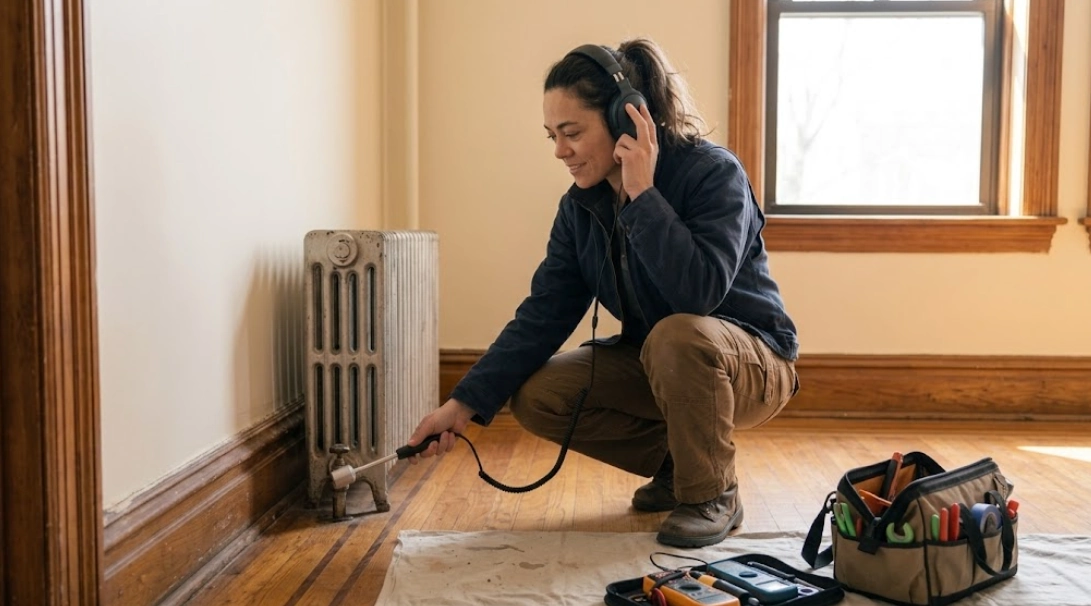
Hidden Water Leaks in Flushing Properties
Water leaks in dense urban neighborhoods present distinct challenges. In Flushing, Queens, where pre-war brick multi-families, mid-century co-operative complexes, and contemporary high-rise towers sit side by side along bustling thoroughfares like Main Street and Roosevelt Avenue, plumbing systems endure intense daily demand. Concealed behind lath-and-plaster, drywall chase walls, and concrete floor slabs, pressurized copper tubing and legacy galvanized supply risers can develop hairline fractures or pinhole breaches that remain invisible for weeks.
When moisture eventually surfaces, the visible stain on a ceiling or wall rarely marks the actual origin of the failure. Water flows along the path of least resistance—traveling down structural steel beams, trickling along horizontal pipe slopes, or pooling atop subfloor layers before soaking through a downstairs neighbor's sheetrock. Unraveling these complex pathways requires specialized diagnostic leak detection rather than haphazard exploratory demolition.
Whether you manage a residential complex near Downtown Flushing or own a private home off Northern Boulevard, addressing moisture issues early prevents structural deterioration, black mold growth, ruined hardwood flooring, and costly property damage disputes between neighboring tenants.
Notice Moisture Spreading or Unexplained Water Bills?
Speak directly with an experienced diagnostic technician to evaluate symptoms and schedule targeted leak detection in your Flushing property.
Call (315) 202-8009Warning Signs of a Concealed Water Leak
Because pressurized water pipes run continuously beneath floors and behind partitions, early symptoms of leakage can be subtle. Property owners, superintendents, and apartment residents should watch for these dependable indicators:
Visual & Structural Signs
- Discolored yellow, brown, or dark water stains blooming across ceiling panels.
- Blistering, bubbling paint or peeling wallpaper along bathroom and kitchen partition walls.
- Spongy, warped hardwood boards or buckling floor tiles near plumbing fixtures.
- Persistent dampness or white efflorescence mineral powder on exposed basement masonry.
- Sagging drywall ceilings beneath upper-floor bathrooms or vertical utility chases.
Operational & Meter Indicators
- Unexplained spikes on quarterly NYC Department of Environmental Protection (DEP) water bills.
- Water meter dial spinning steadily when every faucet, showerhead, and appliance valve is closed.
- The faint hissing, dripping, or running water sound behind walls during quiet night hours.
- Noticeable drops in water volume or pressure at showerheads and kitchen faucets.
- Persistent musty odors that linger despite standard household ventilation and cleaning.
Why Tracing Leaks in Queens Apartments and Co-ops Is Complex
Tracing moisture in Flushing's dense housing stock requires an understanding of diverse construction eras. In pre-war co-op buildings, plumbing risers often travel through shared vertical chases constructed from terra-cotta tile or thick plaster. When a leak develops on an upper riser, water may run down vertical framing for two or three stories before finding an escape route through an electrical conduit opening or ceiling seam.
In modern concrete-deck condominiums around Downtown Flushing, plumbing lines may be embedded directly in floor screeds or routed through densely packed dropped ceilings crowded with HVAC ductwork and fire suppression lines. Furthermore, building vibration, thermal expansion cycles from district steam, and historic water hammer can cause solder joints to loosen or create hairline stress cracks in brass fittings. Assuming that a stain beneath a bathtub originates directly from the tub drain often leads to mistaken diagnoses when the real culprit is a pressurized branch supply line located six feet away.
Common Sources of Moisture Infiltration
Pressurized Supply Lines
Hot and cold water supply lines operate under 40 to 65 PSI of continuous pressure. Pinhole leaks, dezincification in old brass fittings, and corroded copper elbows can spray fine mists continuously, quickly saturating building framing.
Drain Stacks & Waste Branches
Gravity-fed cast-iron soil stacks and PVC drain branches leak primarily when fixtures are discharged. Loose slip-joint nuts, degraded lead bends beneath toilets, or cracked hub gaskets frequently generate intermittent dampness.
Fixtures & Gasket Seals
Failing wax rings beneath water closets, deteriorated tub overflow gaskets, worn shower valve cartridges, and leaking dishwashing machine supply connections can channel gallons of water into subflooring during routine daily use.
How Professional Leak Detection Works: Step by Step
Systematic investigative methodology separates skilled leak detection from destructive guesswork. Every evaluation follows a structured diagnostic protocol tailored to multi-unit buildings and standalone properties alike:
-
1
Systematic Intake & Symptom History
We review when dampness first appeared, whether the leak is continuous or intermittent, whether it aligns with rainfall or fixture use, and whether water meters show constant flow.
-
2
Pressure Isolation Testing
By connecting precision test gauges to supply systems and isolating fixture shutoff valves, we determine whether pressure drops occur on cold water lines, domestic hot water lines, or heating circuits.
-
3
Acoustic Sensor Tracing
High-sensitivity electronic listening equipment and ground microphones amplify the distinct high-frequency sound of pressurized water escaping from fractured pipe walls through solid partitions.
-
4
Thermal Imaging & Moisture Profiling
Infrared thermal cameras detect microscopic temperature differentials caused by evaporative cooling or hot water dispersion, mapping the exact boundary of moisture inside walls and beneath tiled floors.
Suspect a Leak Behind Your Walls?
Accurate detection isolates the problem area quickly, preserving your finishes and avoiding unnecessary wall removal.
Call (315) 202-8009Water Leaks Between Apartments: Navigating Co-ops & Condominiums
In multi-family properties across Flushing, ceiling leaks almost always involve two or more parties: the occupant seeing the damage below, the neighbor living above, and the building superintendent or managing agent. Understanding jurisdictional boundaries is critical for a smooth resolution:
- Common Building Elements: Vertical supply risers, roof drainage conductors, and main waste stacks are typically common building infrastructure maintained under building corporation responsibility.
- Demarcation Lines: Individual unit owners are usually responsible for branch plumbing downstream of the unit isolation shutoff valve, including fixture traps, supply tubes, shower pans, and appliance hookups.
- Immediate Mitigation: If water is actively pouring through a ceiling, immediately inform the upstairs resident so they can stop fixture use and check shutoffs. Alert building management without delay so staff can access master building valves if necessary.
Clear diagnostic documentation helps property owners and boards establish whether the issue stems from an individual shareholder's branch line or a shared building riser, eliminating disputes and speeding up necessary repairs.
Targeted Resolution: From Detection to Repair
Once the precise coordinate of a concealed leak is established, the appropriate remediation path becomes clear. The solution must match the physical condition of the piping system rather than applying a one-size-fits-all approach:
| Diagnostic Finding | Recommended Action | Scope & Impact on Finishes | Next Steps |
|---|---|---|---|
| Isolated Pinhole or Fitting Failure Sound copper tubing with healthy wall thickness. |
Localized Section Repair | Single neat exploratory opening; cuts out 6–18 inches of pipe; press-fit or brazed copper couplings. | Explore Pipe Leak Repair → |
| Systemic Galvanized Corrosion Multiple pinholes, internal rust scale, brown water. |
Comprehensive Repiping | Planned multi-branch replacement in Type L copper; avoids chronic recurring water emergencies. | Explore Repiping Services → |
| Waste Stack or Hub Joint Failure Intermittent leak aligned with upper fixture discharge. |
Drainage Stack Service | Targeted cleanout, heavy gasket replacement, or cast-iron to PVC transition sleeve. | Explore Drain Diagnostics → |
Targeted Pipe Section Repair
When an isolated pinhole leak occurs in a sound copper pipe or a single mechanical fitting fails, making a small, neat surgical opening allows a technician to cut out the damaged section and install clean, sweat-soldered or press-fit copper fittings. Learn more about pipe leak repair in Flushing.
System Evaluation & Repiping
When inspection reveals heavily corroded galvanized iron piping, flaking internal rust, multiple historical clamp patches, or systemic brittleness across risers, patching a single leak often causes pressure to breach the next weakest joint. In these cases, comprehensive repiping services offer permanent peace of mind.
Comprehensive Plumbing Solutions for Flushing Properties
Water leaks often connect to broader domestic water, heating, or drainage systems. Explore our specialized services serving property owners throughout Queens:
Pipe Leak Repair
Expert localized repair for pinholes, cracked joints, burst supply lines, and leaking pipes concealed in walls and ceilings. Fast response restores water security. Learn more about pipe leak repair →
Repiping
Replace deteriorating galvanized lines and brittle piping with clean modern copper or PEX. Restore water pressure, eliminate brown water, and eliminate chronic leaks. Explore repiping options →
Water Heater Repair
Diagnose tank leaks, burner lockouts, failed heating elements, and faulty temperature-pressure relief valves on residential water heaters. View water heater repair →
Boiler Repair
Troubleshoot steam knocking, low-water cutoff errors, circulator failures, and hydronic heating leaks in Flushing residential properties. Explore boiler repairs →
Gas Line Repair & Inspection
Professional gas piping repairs, stove hookups, pressure testing, and NYC Local Law 152 inspection compliance support. Read about gas line services →
Drain Cleaning
Clear stubborn kitchen grease clogs, bathroom hair stoppages, and sluggish building branch lines using professional mechanical snakes. View drain cleaning solutions →
Backflow Testing
Annual certified backflow testing, device maintenance, and documentation filing to protect drinking water quality and meet NYC DEP standards. Discover backflow testing →
Local Service Coverage: Downtown Flushing & Main Street
We provide prompt diagnostic assistance across the vibrant neighborhoods of Flushing. Our service routes regularly cover the bustling mixed-use commercial districts along Main Street and Roosevelt Avenue, dense apartment sectors near Downtown Flushing, residential blocks extending toward Northern Boulevard, and properties near the Queens Botanical Garden and Flushing Meadows-Corona Park. For extended Queens coverage details, review our complete Service Areas overview.
Proactive Prevention Advice
Property owners can minimize catastrophic water damage by installing high-quality braided stainless steel supply hoses on washing machines and toilets, regularly testing individual fixture stop valves to confirm they close tightly, and having building pressure-reducing valves inspected to ensure street pressure surges do not exceed 65 to 70 PSI.
Frequently Asked Questions About Leak Detection
Key symptoms include unexpected spikes on your water utility bill, localized warm spots on tile or wood floors, blistering wall paint, damp baseboards, musty mold odors, the continuous sound of running water behind partitions, and brown circular stains appearing on sheetrock ceilings.
Yes. Non-invasive tools such as acoustic pipe microphones, thermal imaging cameras, and moisture meters pinpoint the sound and thermal profile of leaking water through walls and floors. While minor exploratory access may eventually be necessary to physically solder or press a repair fitting onto the pipe, detection prevents random demolition across multiple rooms.
Immediately place a bucket beneath the leak. If sheetrock is sagging significantly with pooled water, carefully pierce the center with a screwdriver to release water into the container before the entire ceiling collapses under weight. Immediately notify the neighbor above and building maintenance so isolation valves can be inspected, then call a diagnostic plumbing specialist.
Both unit residents and the building management company or superintendent should be notified simultaneously. In Flushing co-ops and condominiums, proprietary bylaws govern whether a failure is classified as a building common element (such as vertical risers) or shareholder personal property (such as fixture branch lines and shower pans).
If the piping is healthy copper with a single isolated pinhole or mechanical joint leak, a localized section repair is typically adequate. However, if lines are heavily scaled galvanized steel, show widespread external green oxidation, deliver rust-tinted water, or have experienced repeated leaks, repiping is generally recommended to prevent continuous water emergencies.
Ready to Schedule Water Leak Detection in Flushing?
Speak directly with an experienced technician to describe your leak symptoms and arrange an on-site diagnostic visit.
Call (315) 202-8009